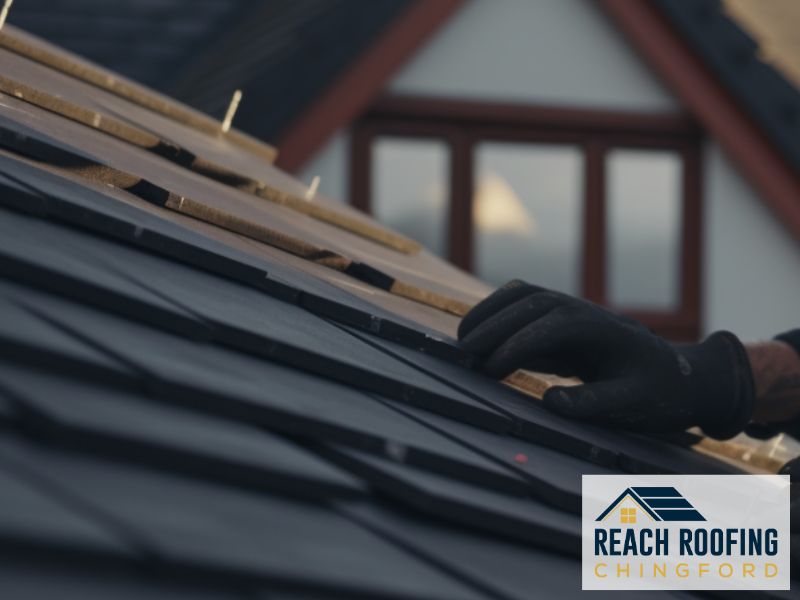
Slate roofs refer to roofing systems that utilize slate tiles as the primary water-shedding surface. Slate is a fine-grained, foliated metamorphic rock that splits into thin sheets. These properties make slate an ideal roofing material that has been used for centuries across the UK.
Slate tiles themselves are produced by hand-splitting quarried slate into uniform rectangles, squares or polygons which can then be installed on roof decking. The unique layered structure of slate tiles enables them to effectively shed water and protect buildings from exterior damage.
Traditional slate roofing has played an important role in UK architectural history. During the 19th century, slate quarrying and export became a major UK industry centered around key regions in Wales, Lancashire and Cumberland. Welsh slate in particular remains highly renowned and sought-after globally.
Today, slate roofs are valued for their durability, natural aesthetics and sustainable qualities. Homeowners, builders and architects choose slate tiles when seeking roofs that require little maintenance yet retain their structural integrity and visual appeal over extended time periods.
Advantages of Slate Roofs
Slate roofs provide a number of compelling advantages that explain their sustained popularity across the UK:
- Durability - Slate is an extremely durable material, resulting in roof lifetimes exceeding 100 years. The dense mineral composition repels water while resisting damage from wind, rain, snow and sunlight. Slate won't rot, burn or be susceptible to insect damage.
- Aesthetic Beauty - Slate possesses a uniquely attractive, layered appearance. Natural slate variations in veining, cleft texture and modular sizing result in depth and visual character difficult to replicate with artificial materials.
- Sustainability - Slate is inherently environmentally friendly. Quarrying slate has relatively low ecological impact, while slate tiles don't require chemical treatments or coatings to extend their longevity. Slate tiles can be recycled and reused multiple times after roof replacement occurs. Minimal maintenance needs also enhance the material's sustainability profile.
For these reasons, architects, homeowners and builders continue to utilize slate as a premium roofing solution able to meet demanding structural requirements while delivering beautiful, sustainable protection.
Challenges Faced by Slate Roofs in the UK
While valued for many positive qualities, slate roofs face some inherent challenges - particularly given the unique climate conditions across the UK:
Weathering
- Over decades of exposure, UK weather takes a toll on any roofing material, including slate. Key issues involve the natural weathering process:
- Repeated freeze-thaw cycles can create small cracks and fissures within slate tiles.
- Driving wind and rain slowly erodes the cleavage planes between slate layers.
- Ultraviolet radiation from sunlight causes slow mineral decomposition and fading of original color tones.
- As slate tiles weather, their water shedding capacity becomes compromised, risking leakage and interior damage. Regular maintenance is required to continually assess slate condition and repair issues promptly. Neglected roofs ultimately require expensive replacement.
Cost Considerations
- Slate roofing demands notable upfront expenditure:
- Slate tile costs are higher than materials like asphalt shingles.
- Multi-layer installation processes require skilled tradespeople charging premium rates.
- Intricate architectural elements (e.g. valleys, dormers) further drive up initial price.
- Over decades of service, the cumulative costs of professional inspections, routine maintenance (e.g re-fastening, damaged slate replacement) and eventual full replacement represent major considerations.
Weight and Structural Factors
- Fully installed, slate roofing exerts substantial dead weight load stresses onto buildings.
- Slate tiles average 6-10 lbs per square foot installed weight.
- Buildings must be engineered and constructed to support this static load over slate's long service life.
- Many older UK buildings with timber rafters lack sufficient structural margins for dense slate roofing. Additional reinforcement is often mandated, increasing project scope, complexity and cost.
Limited Color Options
- Natural slate possesses an inherently limited color palette centered around various shades of blue-grey.
- Architects, homeowners lack the freedom to select vibrant or diverse hues possible with alternatives like clay tiles.
- Color fading due to weathering further narrows available options as roofing ages.
- Creative blends of slate tile sizes, textures and geometries are often leveraged to inject visual diversity.
Common Misconceptions About Slate Roofs
Despite their longevity and capabilities, some key misbeliefs persist regarding slate roofs:
Maintenance-Free Myth
A common slate roof myth is that minimal maintenance is required after installation. In reality:
- Yearly inspections should assess for cracked, loose or missing tiles.
- Storm damage often dislodges poorly fastened slate tiles.
- Small issues left unaddressed risk escalating into costly repairs.
- Vigilant maintenance vastly extends roof lifetime at minimal expense.
While durable, slate roofs perform best with consistent, proactive stewardship focused on early issue detection.
Uniformity of Appearance
Many first-time slate owners expect their roof's appearance to remain uniform over decades. In reality:
- Slate is a natural material with inherent mineral variations that manifest upon weathering.
- Differential weathering can create visual patches and color blending as roofing ages.
- Owners should embrace the organic, evolving patina slate acquires rather than expect permanence of original appearance.
Proper oversight accepts and plans for slate's changing visual character.
Frequently Asked Questions About Slate Roofs
Can slate roofs withstand heavy snowfall?
Yes - The combination of slate's durability, steep pitch and slippery surface composition enable UK slate roofs to reliably shed heavy snow accumulations. Homeowners should still:
- Inspect roofs after heavy snowstorms for any damage
- Use snow rakes to safely remove overhanging accumulations along eaves
- Install slate-cut copper snow fences along vulnerable roof edges
When properly installed and maintained, slate roofs stand up to the UK's most extreme winter conditions.
How often should slate roofs be inspected?
Industry associations recommend inspecting slate roofs at least yearly. Factors warranting more frequent inspection include:
- Roof pitch below 30 degrees
- Presence of overhead trees (risk of debris accumulation)
- Complex roof geometry
- Advanced age of roof and demonstrated weathering
- After major wind/rainstorms
Annual inspections enable early identification of any issues, preventing costly water damage from neglected problems.
Are slate roofs environmentally friendly?
Yes - Slate possesses inherent properties that make it an ecologically wise roofing choice:
- Slate quarrying has relatively low long-term environmental impact
- No tree harvesting or plastic/bitumen materials required
- Extreme longevity means fewer replacement cycles over time
- Tiles can be recycled and reused indefinitely
- Needs no chemical treatments to augment durability
When sourced responsibly, slate roofing's sustainability credentials are difficult for other roofing products to match.
What is the average lifespan of a slate roof?
Properly installed and maintained slate roofs can last 100+ years. Factors extending roof lifespan include:
- Selecting high-quality slate grade and minimum thickness
- Using corrosion-resistant fasteners
- Annual inspections to identify issues early
- Proactive maintenance and repair of vulnerabilities
- Avoiding roof traffic and vegetation encroachment
With appropriate stewardship, slate roofs provide centuries of protection, making them a wise investment in enduring architectural beauty.
Slate roofs offer unmatched longevity and aesthetic appeal, making them a top choice for homeowners seeking quality roofing solutions from Reach Roofing Chingford.
Thanks for reading our post, feel free to check out our other services:
- Chimney Repairs
- Commercial Roofing
- Flat Roofing
- Guttering, Soffits and Fascias
- Lead Roofing & Leadwork
- Pitched Roofing
- Roof Repairs
- Roof Replacement & New Roofs
- Skylights & Roof Windows
- Slate Roofing